

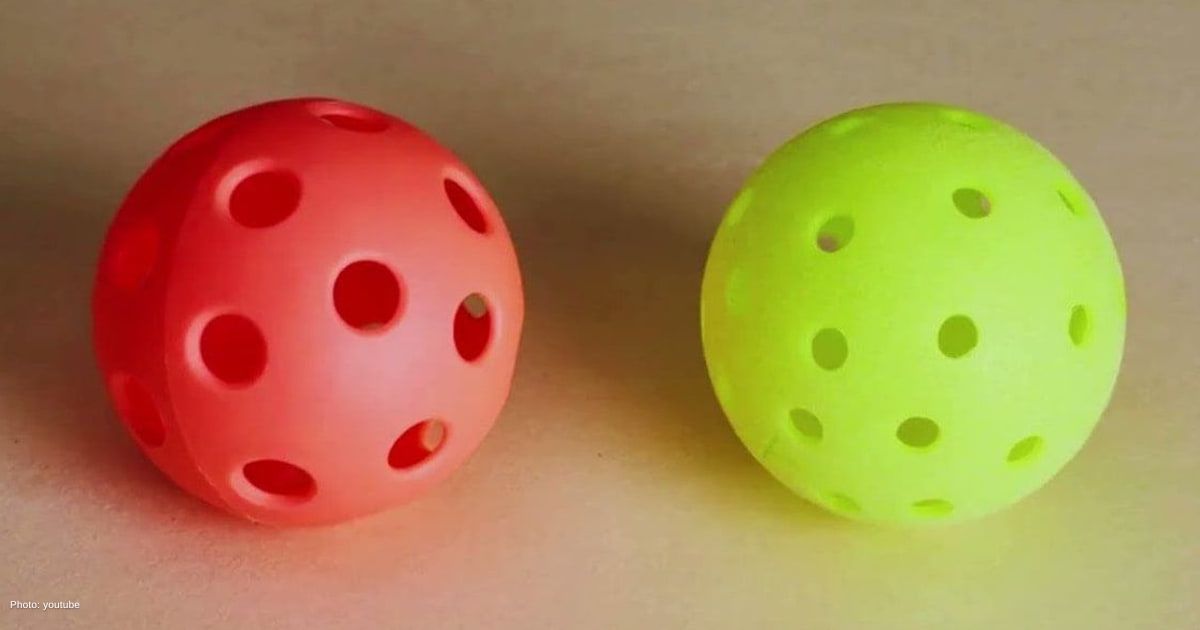
At first glance, every pickleball looks pretty much the same. Indoor and outdoor versions, however, are built to perform in very different conditions. Knowing what sets them apart can make rallies smoother, improve your shot control, and save you from wondering why the ball suddenly feels off.
Spotting the differences
First things first, let’s clear something up. When you hear “indoor” and “outdoor” pickleballs, it isn’t about the courts. It’s about the balls themselves. They may look almost identical, but each is made for a different place to play. So what’s the difference? Here’s what to check:
- Hole count: Indoor pickleballs usually have between 26 and 30 larger holes, while outdoor balls typically feature up to 40 smaller ones.
- Hole size: Those smaller holes help outdoor balls cut through the wind and stay on course, whereas the larger openings on indoor balls are ideal for calm courts.
- Feel: Because the larger holes remove more material, indoor balls are generally a little lighter and easier to control.
Weight plays a role too, although the distinction is subtle. Outdoor balls are generally a touch heavier, giving them extra stability when conditions are less predictable. Even then, both types must fall within USA Pickleball’s official weight range of 0.78 to 0.935 ounces if they’re approved for competition.
Performance on court
The real nuances become obvious once the rally gets going. Outdoor pickleballs are made from harder, thicker plastic, creating a firmer bounce that handles rough courts, sunshine, and changing temperatures much better. That added toughness comes at a cost, however, since harder balls are also more likely to crack after plenty of games.
Indoor balls follow a different recipe. Softer plastic creates a slightly slower feel and predictable bounce on smooth indoor courts. Can you swap one for the other? Technically, yes, but you probably won’t enjoy the result. An indoor ball can get pushed around by even a light breeze, while an outdoor ball often feels unnecessarily quick inside.