

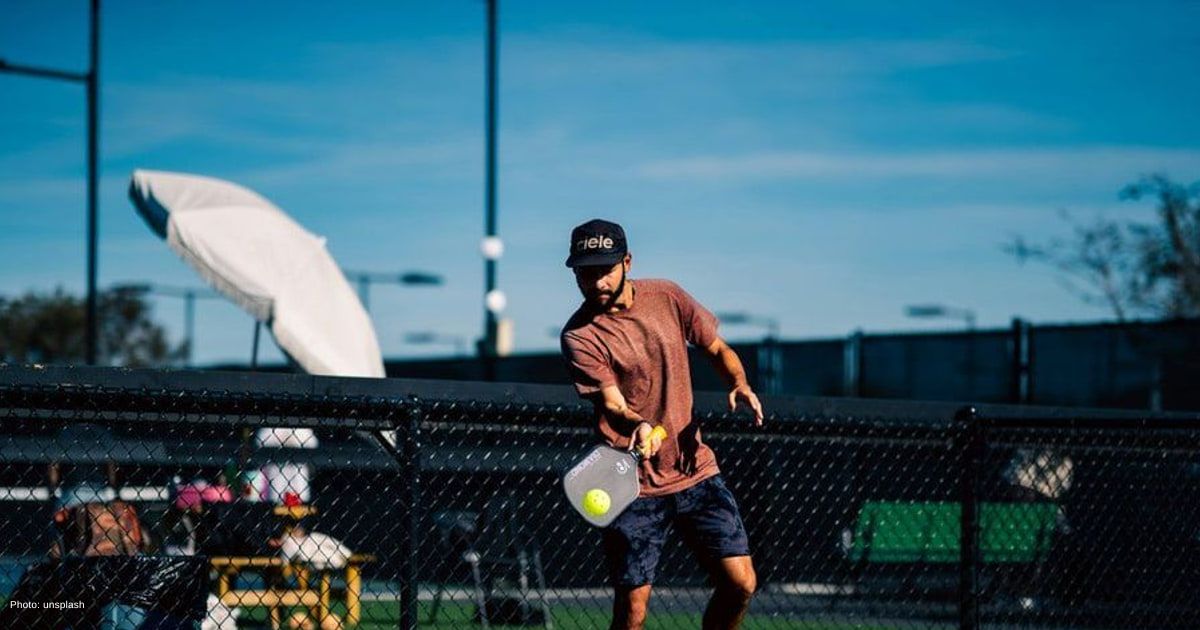
Pickleball often comes down to who controls the net, but the serving team usually starts at a disadvantage. The third shot drop can help level the playing field. This soft shot is played after the serve and return, with the ball arcing over the net and landing in or near the opponent’s kitchen. By forcing a bounce, you gain time to move forward from the baseline and fight for a better court position.
Key Takeaways
The third shot drop is a crucial pickleball technique for the serving team to gain court position and control by landing a soft shot in the opponent’s kitchen.
- The third shot drop is a strategic shot played by the serving team after the serve and return, designed to arc over the net and land softly in the opponent’s kitchen, allowing the serving team to advance towards the net.
- Mastering the third shot drop involves a balanced stance, contacting the ball slightly in front of the body with a continental grip and relaxed wrist, generating the swing from the shoulder, and achieving a smooth follow-through for a gentle arc.
- While the drop is effective, players should also consider using drives or defensive lobs as third shots depending on the situation, and choosing equipment like midweight paddles with textured faces and polymer cores can complement good technique.
Gaining control with third shot drops
Under pickleball’s double bounce rule, the receiving team must let the serve bounce, while the serving side must do the same with the return. This allows receivers to reach the kitchen line sooner and take control of the net.
So, how can the serving team respond? A well-placed third shot drop can slow the rally and make it harder for opponents to attack. Since the ball lands softly in the kitchen, they may have to hit upward, giving you and your partner an opportunity to move closer to the net.
Still, getting the shot right requires control. Start with a balanced stance and make contact slightly in front of your body while smoothly shifting your weight forward. Using a continental grip can help, though your hold should remain relaxed enough to maintain a soft touch.
Mastering the shot
Rather than flicking your wrist, generate the swing mainly from your shoulder and follow through naturally. The ball should travel in a gentle arc, clear the net safely, and then drop into the kitchen without sitting high enough for an easy attack. Depending on the situation, topspin can create a higher bounce, while backspin may help keep the ball lower.
Small errors can quickly ruin the shot. Aiming too low often sends the ball into the net, whereas hitting too hard gives opponents an easier attack. Poor paddle angles, incomplete follow-through, and incorrect weight transfer can also affect accuracy.
Regular practice is the easiest way to improve. Target drills help with placement, while wall exercises let you work on touch without a partner. During partner sessions, start near the kitchen before gradually moving backward. Feed drills can also recreate realistic returns and help sharpen your timing and footwork.
Choosing shots and equipment wisely
Does every third ball need to be a drop? Not always. A drive may be more effective against a high return, in windy conditions, or when opponents struggle with faster shots. A defensive lob can also give you time to reposition, although a weak attempt could invite an overhead attack.
Equipment matters too, but it cannot replace good technique. Midweight paddles between 7.5 and 9.1 ounces can offer a useful balance of control and stability. Textured faces may help generate spin, while polymer cores are often preferred for their softer feel. In the end, choosing the right third shot depends on your position, your opponents, and what is happening during the rally.