

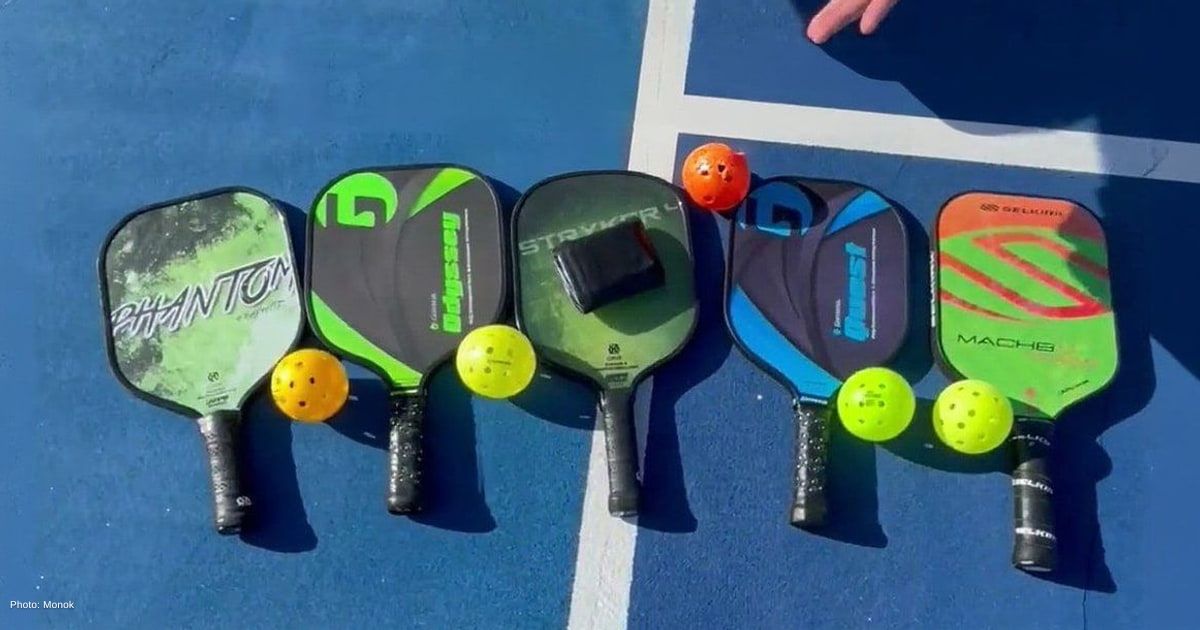
Choosing a pickleball paddle might seem simple at first, but a closer look shows there is much more to consider. No two pickleball paddles feel exactly the same, and those differences can influence the way you play. Once you understand what each feature does, comparing different paddles becomes much easier.
Start with the basics
Every pickleball paddle has several key parts, including its shape, core, face material, handle, weight and grip. So where should you begin? Paddle shape is the easiest place to start because it affects your reach and where the sweet spot sits.
Standard paddles offer balanced performance for most players, elongated models provide extra reach, power and spin for singles matches, while wide-body designs create a larger hitting area that helps beginners make cleaner contact. Since every paddle works for both indoor and outdoor play, the best option is the one that suits your playing style.
Fine-tune your setup
After narrowing down the shape, the next step is looking at the materials. Polypropylene cores remain the most popular because they combine durability, quieter play and excellent control, whereas Nomex delivers faster shots and aluminum keeps the paddle light and easy to handle.
Face materials such as composite, fiberglass, carbon fiber, graphite and hybrid designs each provide their own balance of power and spin. Weight also plays a big role because lighter paddles move quickly, mid-weight options suit most players, and heavier versions generate stronger shots.
Finally, make sure the grip fits your hand comfortably using simple height or finger measurements. A paddle that feels right in your hand can make every match more enjoyable.
If you’re just getting started, light or mid-weight paddles with larger sweet spots are often a good place to begin. Later on, you can explore paddles that better suit the way you like to play. Now, ready to make your pick?